Sales tax
We support state and local sales tax requirements and the integration of suitable solutions such as Avalara AvaTax.

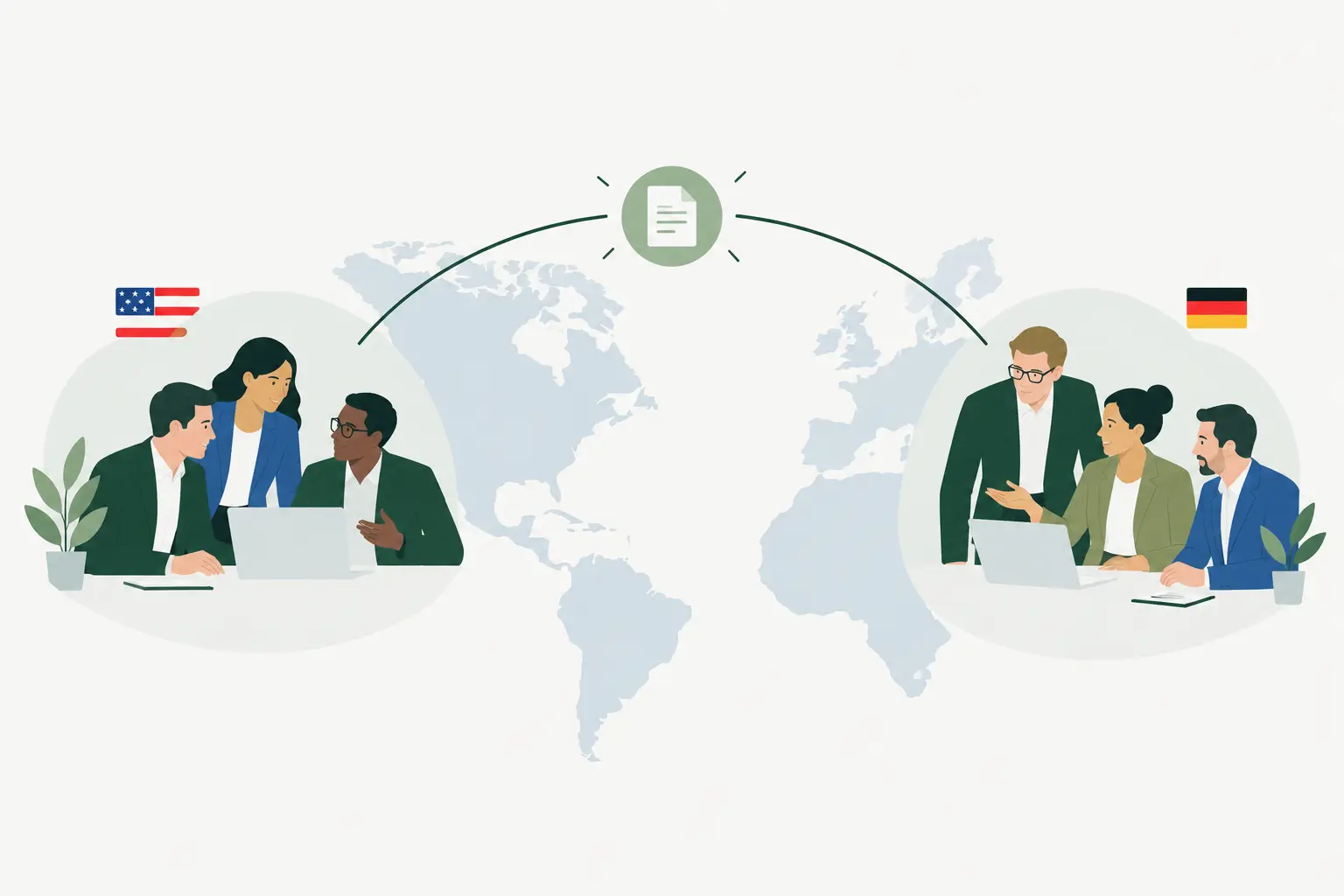
One ERP. Two markets. One partner.
With local companies in Germany and the United States, we help businesses establish and operate their U.S. organization. Processes, Microsoft Dynamics 365 Business Central, and ongoing support come from one coordinated team – aligned with shared group standards and the local requirements of both countries.
The details that make an ERP solution work in the United States
We support state and local sales tax requirements and the integration of suitable solutions such as Avalara AvaTax.
Chart of accounts, posting logic, periods, payments, and internal policies are configured for the U.S. entity and the group model.
Documents and reports are designed for U.S. Letter paper and local address, date, and presentation conventions.
We prepare the reporting and data structures needed by U.S. authorities, tax advisors, and internal group reporting.
We also support U.S. companies establishing or operating a German entity. Our German team connects your corporate ERP model with local finance, tax, document, and reporting requirements while keeping processes aligned with headquarters.
VAT posting groups, rates, document requirements, and reporting processes are mapped correctly in the ERP setup.
We support the data capture and processes required for Intrastat and German EC Sales List reporting (ZM).
Chart of accounts, posting rules, periods, audit trails, and local bookkeeping practices are reflected in Business Central.
German statutory and operational requirements are translated into practical ERP processes and coordinated with your U.S. headquarters.
We implement the agreed requirements in processes and systems in coordination with your German tax and legal advisors.
One source for ERP support on both sides of the Atlantic
Proven group processes remain consistent and are localized where the U.S. operation has distinct requirements.
One coordinated mse team manages consulting, implementation, and ongoing support across both countries.
U.S.-specific workflows and conditions are incorporated directly into design and day-to-day support.
Business and technical requirements are aligned clearly between the German headquarters and the U.S. team.
Collaboration between both companies expands availability for teams in Germany and the United States.
The setup grows from the first U.S. entity to additional locations, processes, and reporting obligations.